It’s completely normal to struggle with how you see yourself sometimes. Low self-esteem can feel heavy and limiting in many areas of your life. It can stop you from taking chances or believing in your own success. The good news is that you don’t have to stay stuck in that cycle.
You have the power to change how your mind works. We are going to explore powerful Cognitive Behavioral Therapy today. These practical CBT techniques offer a clear path forward. Learning to use these therapy methods can significantly improve your self-esteem right now. This guide will give you the steps to start your own Self-Esteem Boost journey.
Understanding How CBT Techniques Help You Improve Your Self-Esteem
Cognitive Behavioral Therapy (CBT) is an evidence-based approach. It teaches us that our thoughts, feelings, and actions are all connected. Changing one part of this triangle will affect the others. This is the foundation of how Cognitive Behavioral Therapy works.
Low self-esteem often comes from distorted or unhelpful thought patterns. CBT gives you the skills to identify these patterns. It’s like learning the secret code to your own mind. When you use these CBT techniques, you challenge those negative ideas. This is how you begin to see a real Self-Esteem Boost.
Taming Negative Self-Talk: The First CBT Therapy for a Self-Esteem Boost
The voice in your head can be your own worst critic. This consistent stream of Negative Self-Talk is very damaging. It reinforces the low opinion you have of yourself. Stopping this inner critic is the first, crucial step toward using CBT to improve your self-esteem.
Start by noticing when you talk down to yourself. Is it after a mistake? Is it when you look in the mirror? Simply acknowledging the thought is an excellent CBT technique. You can’t change what you don’t first recognize.
Identifying Common Thinking Traps
CBT helps you label specific types of unhelpful thinking. These are often called “thinking traps” or cognitive distortions. Examples include “all-or-nothing” thinking or “jumping to conclusions.”
If you spill coffee, do you think, “I am a total failure”? That’s a thinking trap. A useful Cognitive Behavioral Therapy method is to put a label on that thought. Say to yourself, “That’s catastrophizing, not the truth.” This immediately reduces the thought’s power. [Definition of Cognitive Restructuring]
Challenging Your Core Beliefs Using Cognitive Behavioral Therapy
Below your daily thoughts are deeply held ideas about yourself. These are your Core Beliefs. Low self-esteem often comes from core beliefs like, “I am unlovable” or “I am incompetent.” These beliefs are often learned in childhood.
These Core Beliefs are not facts; they are old, ingrained ideas. They act like a filter for everything you experience. When something good happens, your core belief dismisses it. When something bad happens, the belief says, “See, I told you so.”
The Evidence-Based Approach to Changing Core Beliefs
To improve your self-esteem, you must challenge these deep-seated notions. CBT focuses on gathering evidence against the old belief. You need to become a detective in your own life. Write down concrete examples that contradict your negative belief.
For instance, if your belief is “I am incompetent,” list three times you succeeded at work or helped a friend. This CBT technique is called cognitive restructuring. The evidence weakens the negative belief over time. It creates a new, more balanced belief.
Practical Cognitive Restructuring: Daily CBT Techniques to Improve Your Self-Esteem
Cognitive Restructuring is the active process of reshaping your thoughts. It’s a powerful muscle you need to exercise daily. This is where you replace the old, unhelpful thought with a new, realistic one. This helps you improve your self-esteem every time you practice it.
When you catch a negative thought, stop and ask three questions. First: “Is this 100% true?” Second: “What is the evidence for this thought?” Third: “What is a more helpful, realistic way to think about this?” These Cognitive Behavioral Therapy steps are quick to use. They interrupt the negative cycle immediately.
For instance, instead of “I ruined the whole presentation,” a balanced thought is “I made a mistake on one slide, but the rest was solid.” This is how you use CBT techniques to create a lasting Self-Esteem Boost. [BACKLINK: Scientific study on CBT efficacy]
The Power of Thought Records: Logging Your Way to Better Self-Esteem
One of the most effective Cognitive Behavioral Therapy techniques is the Thought Record. This is a simple journal method. It helps you systematically analyze negative thinking. Using Thought Records makes the process of Cognitive Restructuring concrete.
You write down a situation, the resulting emotion, the automatic negative thought, and the evidence for and against that thought. Finally, you write a balanced, realistic replacement thought. This exercise breaks down the negative thinking habit. This is a critical CBT technique for long-term change.
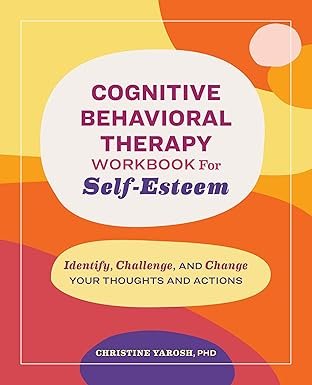
Many people find it easier to start this process with a structured book. For a detailed, step-by-step guide to applying these methods, consider using a resource like The CBT Workbook for Self-Esteem, widely available on Amazon. It provides templates and examples to help you practice using Thought Records daily. Consistency with this therapy method will dramatically improve your self-esteem.
You must practice these skills to see real results. They won’t work if they stay in your head. Commit to doing one Thought Record every day this week.
Backing Your Self-Esteem Boost with Action
CBT is not just about thinking; it’s also about action. Once you change your thoughts, you should change your behavior. This solidifies the positive changes you have made. [ Behavioural Experiments in Cognitive Therapy for Posttraumatic Stress Disorder: Why, When, and How?]
Set small, achievable goals that challenge your old Core Beliefs. If you believe you are “unskilled,” take a short online course. The positive action provides tangible evidence against your negative thinking. Every small success acts as a reward, which further helps improve your self-esteem.
You have the therapy methods now to take charge of your inner world. This is your chance to fix your mindset and create a more positive narrative for yourself. For more insights on mental fitness and evidence-based strategies, check out deepmindfix.com.
Conclusion
You have learned powerful CBT techniques that truly work. Cognitive Behavioral Therapy methods like taming Negative Self-Talk and using Thought Records are your new habits. Challenging deeply held Core Beliefs is a serious task, but a necessary one. You are now equipped for a true Self-Esteem Boost.
Remember, consistency is the key to using Cognitive Restructuring effectively. Start small with one technique today. You deserve to see yourself clearly and kindly. Take the first step now to improve your self-esteem and change your life.
.